Date: 10-11/03/2026
The CarboGrass project was pleased to present the results of its systematic map at the Journées de Printemps, held in Dijon, France, from March 10-12. This conference focused on the role of grasslands and forage systems in the agroecological transition, bringing together researchers and practitioners around the 13 principles of agroecology defined by the FAO. Presentations covered a wide range of topics, from nutrient recycling and knowledge co-creation to biodiversity and input reduction, with particularly strong emphasis on reducing external inputs and enhancing ecosystem functioning.
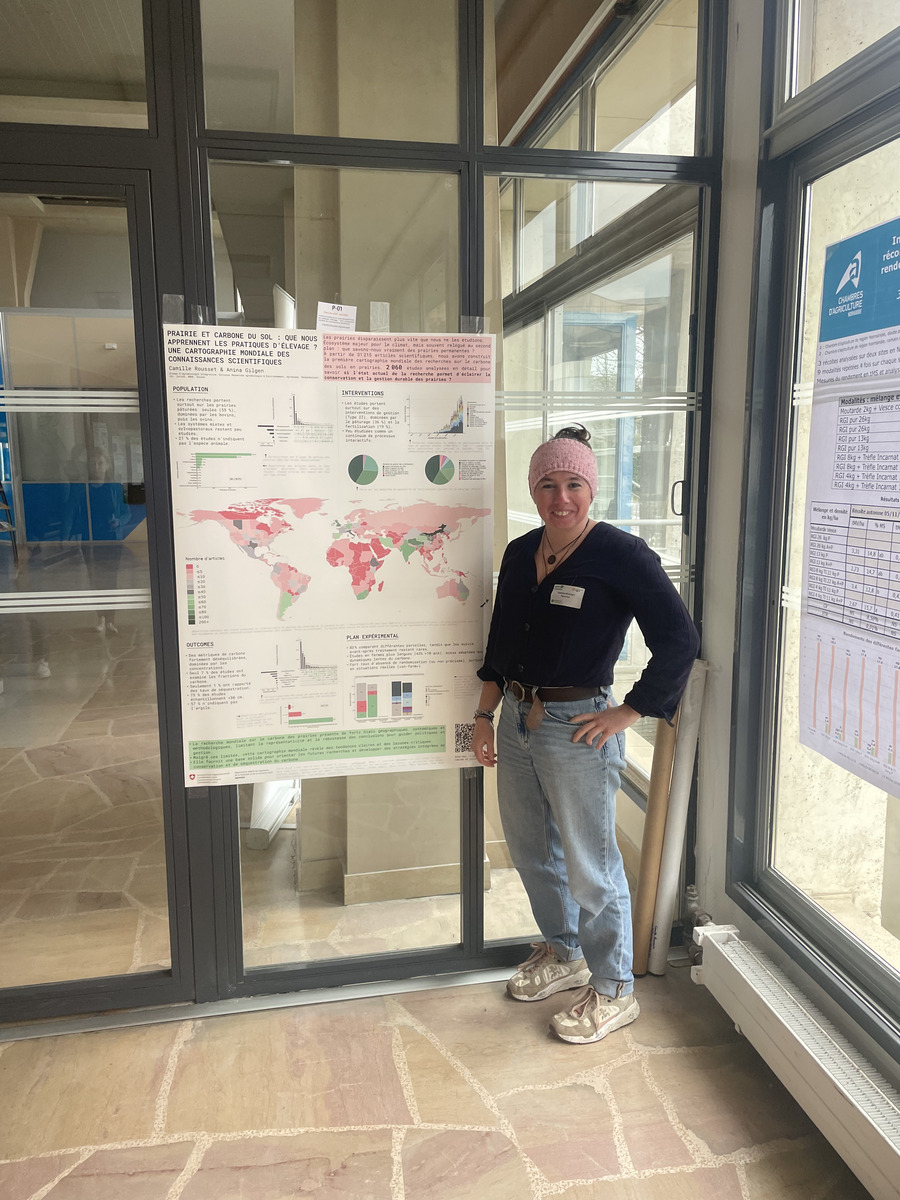
Our poster, Prairies et carbone du sol : que nous apprennent les pratiques d’élevage ? Une cartographie mondiale des connaissances scientifiques (“Soil Carbon and Grasslands: What can livestock management tell us? A Global Evidence Map”), contributed to the soil health dimension of agroecology by mapping the global distribution of scientific studies on livestock management and soil carbon in grasslands. Rather than assessing the effects of practices on soil carbon stocks, this systematic map identifies where research efforts have been concentrated and where important knowledge gaps remain across management practices, regions, and pedoclimatic contexts. Highlighting these patterns helps researchers and policymakers recognize potential research biases and better target future studies to support more balanced and informed grassland management strategies.
During the flash talk session, Camille Rousset presented the methodology, timeline, and objectives of the systematic map (see Rousset et al. 2024 for more info), while the poster showcased the main findings and introduced the interactive Shiny app developed to explore the dataset. Scientific publication soon to be followed in Environmental Evidence journal!!